
Originally posted February 2, 2020
Interviewed by Amy Stich, Assistant Professor, Institute of Higher Education, University of Georgia. Part of a series to help demystify the conference and convince you to join us!
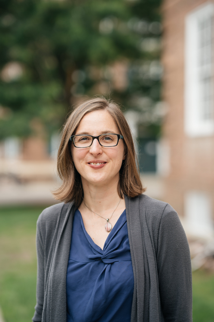
Janice M. McCabe is an associate professor of sociology and the Allen House Professor at Dartmouth College. She teaches courses on the sociology of gender, youth, education, social problems, and research methods. Her book, Connecting in College: How Friendship Networks Matter for Academic and Social Success (University of Chicago Press, 2016), and current research focuses on friendship networks and identities during college and into young adulthood. She is interested in how gender, race/ethnicity, and social class operate as social identities and how they shape social networks.
Q: When did you first attend SEA? Can you tell us what your first SEA conference experience was like?
A: I first attended in 2008 when the theme was “Higher Education Access and Success.” At the time, I was a new Assistant Professor and excited to connect with others who were researching colleges from a sociological perspective – there weren’t many of us at the time. My expectations were exceeded by a mile! Not only did I find out about great work on higher education, I ended up making long-lasting connections with many of these people. I was hooked and I’ve been back nearly every year since!
Q: What do you like most about SEA? Why?
A: SEA is my favorite conference to attend. Here’s a few reasons why: (1) There is only one session at a time, which means that everyone hears everyone’s papers. Between the papers and the keynote addresses, I always learn much. (2) Everyone eats meals together at Asilomar’s dining hall, so there are plenty of chances to talk with other attendees while you’re eating. (3) There are more chance to talk at the breaks between sessions and the receptions each evening, which follow the keynote addresses. And it’s a great size (usually 80-100 people, at least when I was registrar) to meet new people and re-connect with old friends and colleagues. (4) The location. It’s beautiful. I try to take a walk on the state park beach, which is just a few minutes away, each day that I’m there.
Q: How has SEA changed over the years, if at all? What do you think of these changes?
A: It hasn’t changed much in the 10+ years I’ve been attending. From being Program Chair and on the Board of Directors, I know that the association leadership is open to new ideas but also keen to retain what makes SEA special. It’s still a great mix of newer scholars and more established ones, with opportunities to get to know each other.
Q: How has SEA shaped or influenced your scholarship?
A: It’s shaped it in many ways. Presenting there is a great way to share your ideas with people in our subfield. And it’s also a great way to find out what other people are working on and thinking about – theoretically, methodologically, and empirically. I’ve enjoyed taking a couple of my undergraduate students with me over the years, including one who co-presented work with me. It’s also shaped my scholarship in terms of many of the people I’ve met there, including my book editor and a co-author. I study college students’ friendship networks and can’t help but note that SEA has been one of the most important ways that I’ve deepened and broadened my network.

 Sociology of Education Association